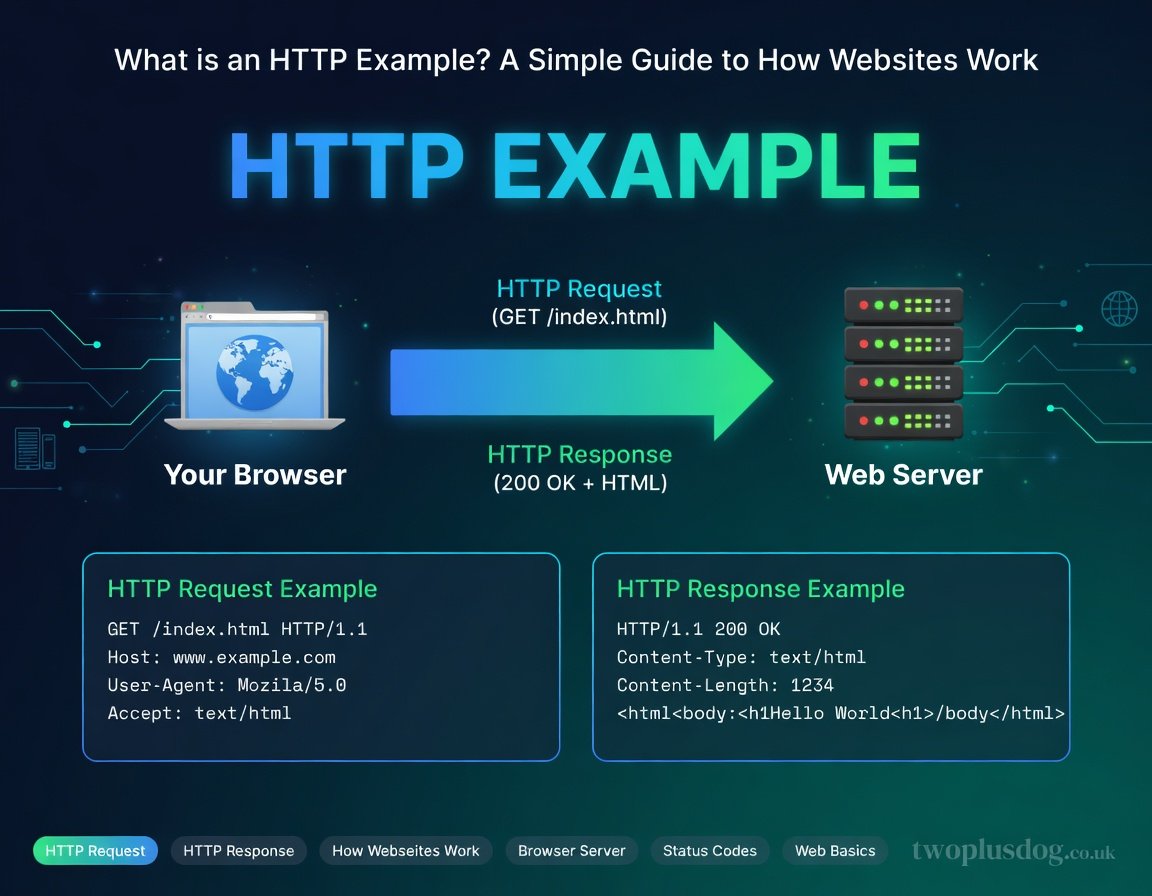
Have you ever wondered what happens when you type a website name and hit enter? It feels like magic, but it is actually a very organized conversation. This conversation uses something called a protocol. You can think of a protocol as a set of rules for talking. For the internet, the main set of rules is called HTTP. Seeing an http example helps us understand how our computers ask for pictures, videos, and stories from the web. It is the foundation of everything we do online today. Without these rules, the internet would be a giant mess of data that no one could understand.
When we look at an http example, we are looking at a request and a response. Your computer is the “client” and the big computer holding the website is the “server.” The client asks a question, and the server gives an answer. It is just like ordering food at a restaurant. You tell the waiter what you want, and they bring it to your table. Understanding this process makes the internet feel much smaller and easier to manage. In this article, we will break down how these messages look and why they matter for your daily browsing.
What is an HTTP Example Exactly?
An http example is basically a text message sent between two computers. When you click a link, your browser sends a “GET” request. This is like saying, “Hey, please give me the home page of this site.” The server looks at its files and sends back a response. If everything is okay, the server sends a code that says “200 OK.” This means the file was found and is being sent to your screen right now. If the file is missing, you might see the famous “404 Not Found” message instead.
I remember the first time I saw a raw http example in a coding class. I was surprised at how simple it looked! It is not a bunch of scary numbers. It is mostly plain English words like “Host,” “User-Agent,” and “Accept-Language.” These headers tell the server what kind of computer you are using. This helps the server decide if it should send you a version of the site for a phone or a desktop computer. It is a very smart system that works in less than a second.
Why Do We Use HTTP Every Day?
Every time you use an app or check the news, you are using this protocol. An http example shows us that the web is a giant library. HTTP is the librarian who goes to the shelf to get your book. It makes sure the information gets to you safely and quickly. Without it, we would have to know exactly where every file is stored on a server. That would be impossible for most people to do. HTTP handles the hard work so we can just enjoy the content.
Most people don’t think about it, but a clear http example proves how much we rely on rules. Imagine if everyone spoke a different language at the same time. No one would understand anything! HTTP provides a “common language” for the whole world. Whether you are in New York or Tokyo, your computer uses the same http example format to fetch data. This global standard is what makes the World Wide Web truly “worldwide” and accessible to everyone with a connection.
The Difference Between HTTP and HTTPS
You might notice that most websites now start with HTTPS. An http example for a secure site looks very similar, but it adds a layer of “S” for Security. This means the message is scrambled so hackers cannot read it. Imagine sending a postcard through the mail. Anyone can read a postcard. That is like standard HTTP. Now, imagine putting that postcard in a locked metal box. That is HTTPS. It keeps your passwords and credit card numbers safe from prying eyes.
Even though HTTPS is safer, looking at a basic http example is the best way to learn. The basic structure remains the same. The secure version just uses a “handshake” at the beginning to share a secret key. In my experience, understanding the simple version first makes the complex stuff much easier to learn later. Every expert started by looking at a plain http example to see how headers and bodies work together. It is the first step into the world of web development.
Breaking Down the HTTP Request Body
When you fill out a contact form or log in, you send a “POST” request. A common http example of a POST request includes a “body.” This is the part of the message that carries your data. Unlike a GET request, which just asks for things, a POST request gives things to the server. The body might contain your username, your email address, or a comment you wrote on a blog. The server takes this body, processes it, and saves it to a database.
If you look at an http example for a login page, you will see how the data is organized. It usually looks like a list of names and values. For instance, it might say “user=John” and “pass=12345.” This is why security is so important! You wouldn’t want that information sent out in the open. However, studying the http example helps developers fix bugs. If a form isn’t working, they check the request body to see if the data is being sent correctly to the server.
Common HTTP Status Codes Explained
Have you ever seen a “404 Error” and felt frustrated? That is a status code. In any http example response, the very first line tells you if the request worked. A “200” is like a green light. A “301” means the page moved to a new home. A “500” means the server is having a bad day and crashed. These codes are short and fast for computers to read. They save time because the browser knows exactly what to do as soon as it sees the number.
I like to think of these codes as a secret code language between machines. When you see an http example with a “403 Forbidden” code, it means you don’t have permission to be there. It is like a “No Trespassing” sign. Knowing these codes helps you understand why a website might be acting slow or failing to load. It turns a “broken website” into a specific problem that can be solved. Every http example provides these clues if you know where to look.
Understanding Headers in an HTTP Example
Headers are like the “To” and “From” sections on an envelope. In an http example, headers provide extra details that aren’t the main content. For example, the “Content-Type” header tells the browser if it is receiving an image or a text file. The “Cookie” header helps the website remember who you are so you don’t have to log in every time you click a new page. These small lines of text do a lot of heavy lifting for our user experience.
If you ever inspect a website using your browser tools, you can see a live http example. You will see dozens of headers flying back and forth. Some headers tell the browser how long to save a picture so it doesn’t have to download it again tomorrow. This is called “caching.” It makes the internet feel much faster. A good http example shows how these headers work together to create a smooth and fast experience for everyone using the web.
How Browsers Handle HTTP Responses
Once the browser receives an http example response, it starts to draw the page. This is called “rendering.” The browser reads the HTML code inside the response and turns it into colors, fonts, and buttons. If the HTML mentions an image, the browser sends another request for that image. A single webpage might actually require fifty or sixty different http example requests just to load one page! This is why fast internet speeds are so helpful today.
Watching a browser load a page is like watching a builder follow a blueprint. Each http example is a new piece of material delivered to the construction site. The browser puts the text here, the sidebar there, and the video at the top. If one http example fails, a part of the page might look blank. This is usually why you see broken image icons. The request was sent, but the server couldn’t provide the file, or the connection was lost.
The Role of Methods: GET vs POST
We talked a little about GET and POST, but there are others too! In a technical http example, you might see “PUT” or “DELETE.” These are called methods. “PUT” is used when you want to update something that already exists, like changing your profile picture. “DELETE” is exactly what it sounds like—it tells the server to remove something. Using the right method in an http example is a key part of being a good web developer and keeping data organized.
Most regular users only ever trigger GET and POST. When you type a URL, it is always a GET. When you click “Submit,” it is usually a POST. Every http example starts with one of these “action words.” It sets the tone for the entire conversation. If you use the wrong word, the server might get confused and send an error. It is very much like using the right verb in a sentence so people understand what you are trying to do.
Why Latency Matters in HTTP Requests
Latency is the time it takes for one http example to travel from your house to the server and back. Even though light travels fast, it still takes time! If a server is in another country, your http example has to travel through thousands of miles of cables under the ocean. This is why some websites feel “laggy.” Developers try to keep their http example messages small so they can travel as fast as possible across the world.
To improve this, many companies use “CDN” services. This means they keep copies of their files in many different cities. So, if you are in London, your http example goes to a server in London instead of one in California. This reduces the distance and makes the site pop up instantly. A simple http example can teach us a lot about how geography and physics still play a role in our digital lives every single day.
The Future of HTTP: Moving to HTTP/3
The way we send an http example is changing! For a long time, we used version 1.1. Then we moved to version 2, which allowed many messages to be sent at once. Now, we are moving to HTTP/3. This new version is even faster because it handles lost data better. In an older http example, if one tiny piece of data was lost, the whole thing would wait. With the new version, the rest of the page keeps loading while the missing piece is found.
This progress is exciting because it makes the web accessible to people with slow phone connections. Even a complex http example will load quickly on a weak signal. As we continue to build more “Helpful Content” for the world, these technical rules ensure everyone can see it. It is amazing to see how a simple idea from 1989 has grown into such a powerful system. The humble http example remains the heartbeat of our modern, connected society.
Conclusion
Understanding an http example is like peeked behind the curtain of a theater. You get to see how the actors move and how the lights work. It takes the mystery out of technology and gives you more control. Whether you want to build your own blog or just understand why a site is slow, knowing these basics is very helpful. Always remember that the internet is just a series of friendly requests and helpful responses between computers.
If you found this guide useful, why not try to see a real http example yourself? You can right-click any webpage, select “Inspect,” and click the “Network” tab. Refresh the page, and you will see hundreds of requests appearing! It is a great way to learn by doing. The web is a vast place, but it is all built on these simple, easy-to-understand rules. Keep exploring, stay curious, and happy browsing!
FAQs
1. What is the most common http example I see? The most common one is a “GET” request. This happens every single time you click a link or type a website address. Your browser asks the server to “get” the file so you can look at it.
2. Can I see an http example without being a coder? Yes! Most web browsers have “Developer Tools.” If you press F12 on your keyboard and look at the “Network” section, you can see every http example your computer is sending in real-time.
3. Is an http example different on a phone? The basic rules are exactly the same! A phone sends a request just like a desktop computer. The only difference might be a “header” that tells the server to send a smaller version of the site.
4. Why is my http example showing a 404 error? A 404 error means the “request” reached the server, but the specific page you asked for does not exist. It might be a typo in the URL or a page that was deleted recently.
5. How many times is an http example sent for one page? It depends on the site! A simple page might only need 10 requests. A big site like a news store or social media app might send over 100 requests to load all the ads, photos, and fonts.
6. Does an http example contain my name? Only if you typed it into a form! A standard request for a public page doesn’t know who you are. It only shares technical details like your browser type and your IP address.